The government’s proposed rent freeze could save renters on average £324 a year according to new analysis from the campaign group Generation Rent.
On 27th April, the Guardian reported that the Chancellor Rachel Reeves is considering imposing a one-year rent freeze on private rented homes amid growing alarm in government about the impact of the Iran war on voters’ budgets.
Generation Rent’s analysis* found that if the average household faced a 1.9% rent increase over the next year, in line with current trends, they would spend an additional £324 across the year on rent, or £27 a month.
On average, private renters spend over 36% of their income on rent, with the government’s definition of an affordable rent being 30% of someone’s income or less. Meanwhile, data from the DWP found more than a third of private renters are living in poverty.
Ben Twomey, Chief Executive of Generation Rent, said:
“Homes are the foundations of our lives. But when we are forced to spend too much of our income on rent, it means children are going to school hungry or older renters who can’t afford to turn the heating on.
“Many renters are already paying more than we can afford. Further rent rises due to international events way out of our control would pull even more people into poverty. It’s encouraging that the government is considering a rent freeze and we urge them to press ahead and bring it in as quickly as possible to give renters the breathing space we need.”
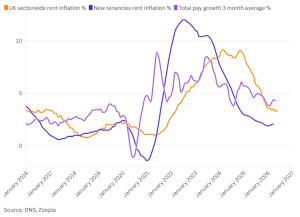
*Under the Renters Rights Act, renters can challenge rent increases at the First-tier Tribunal, which will use local rents on new tenancies as the benchmark for setting a “reasonable” rent. The latest figures from Zoopla found new tenancy rents rose by 1.9% in the 12 months to January, so this is the rate we might expect landlords to be able to raise rent for existing tenants by in the months ahead (assuming they raise the rent once a year), without a freeze in place. The average rent in England of £1434 is taken from the Office for National Statistics. Although interest rates on buy-to-let mortgages rose from 4.66% to 5.29% in March (source), this is a much smaller increase than we saw after the pandemic, when rates doubled from approximately 2.5% to 5% in 2022-23.