On 1st May 2026, the Renters’ Rights Act finally came into force. The new law is a generational change for private renters in England and should be celebrated as a vital step in addressing the power imbalances between tenants and landlords.
However, it is only a first step, not the finish line. Issues such as the spiralling cost of rent and poor quality homes continue to impact renters’ lives. With a new Prime Minister imminent, here we explore five key policies they should support, with very little cost to the Treasury, to make sure all renters in England have an affordable, good quality home.
Urgently limit rent increases
Private renters in England spend over 36% of their income on rent on average, with nearly four in ten private renters living in poverty after housing costs.
The Renters’ Rights Act gives renters more power to challenge rent increases, but nearly seven in 10 renters have never heard of the First-Tier Tribunal (the system which renters use to challenge). Meanwhile, the tribunal uses market prices to decide on what a ‘fair rent’ is. But market prices are currently unaffordable for many people.
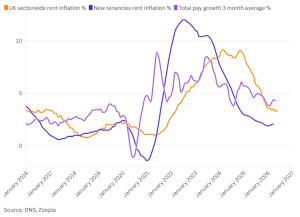
Therefore, with another inflation spike predicted, the government must urgently introduce a limit to how much landlords can raise the rent, linked to the lower of CPI or wage growth, protecting renters from being priced out of their homes due to international events or landlord greed.
Accelerate measures to improve the quality of homes
Despite being so expensive, private rented homes are of significantly worse quality than owner-occupied homes or social homes. Four in ten renters are currently living with damp or mould, while more than one in five are ‘non decent’, meaning they don’t meet a basic government standard that covers repairs, heating, kitchen and bathroom facilities and hazards.
The Renters’ Rights Act applies the Decent Homes Standard and Awaab’s Law (which sets timescales in law for landlords to respond to hazards such as mould and damp) to the private rented sector. However, the Decent Homes Standard is not set to be implemented until 2035, meaning renters will have to wait almost a decade to ensure their homes meet minimum standards. Meanwhile the timeline to implement Awaab’s Law is unknown.
Homes are the foundations of our lives – they should never actively harm people’s health. Therefore, the government must bring the Decent Homes Standard forward to 2030 at the latest, while implementing Awaab’s Law as soon as possible.
Support and properly enforce new minimum energy efficiency standards
Private renters are most likely to live in fuel poverty. To help tackle this issue while also reducing emissions, the government is mandating that all private rented homes meet Energy Efficiency Rating C by 2030 (just under half currently fall below this).
However, for renters to feel the benefits of their new warmer home and cheaper bills, the new standards must be properly enforced, including enabling renters to claim a Rent Repayment Order if their landlord is not abiding by them.
End Right to Rent
Right to Rent is a Home Office policy that requires landlords to run immigration checks on people they rent to, with hefty fines for those that rent to people who are judged to not have the right to live in the UK.
However, in reality, many landlords simply refuse to rent to people without a British passport for fear of getting it wrong. This is a major barrier to people with the right to live in the UK from accessing private rented homes and can be seen as one of the causes of the big spike in homelessness among refugees we have seen in recent years.
Compensate renters when they are forced to move
Our analysis found an unwanted move costs the average renter household over £2,200. Despite the Renters’ Rights Act doubling notice periods for ‘landlord need’ evictions, renters will still have very tight windows to find a new home due to needing to avoid paying rent on two tenancies.
Therefore, when a landlord evicts a tenant to sell the home or move themselves or a family member in, they should be forced to agree to waive two months of rent to help the renter with the upfront cost of moving home. This would prevent renters from being forced into homelessness or debt, reducing strain on local councils and the money spent on temporary accommodation.