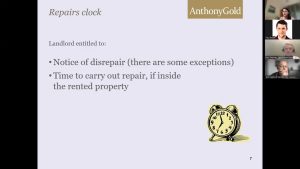
Be aware of your rights around disrepair. There are two main ways landlords can be liable for repairs:
- If there is damage to the structure, exterior (e.g. roof, outside walls, windows) or services for gas, electricity or plumbing.
- If your home is unfit to live in. The home could be dangerous, or already making you physically or mentally ill (a doctor’s note would help you convey this). Fitness of a home includes being able to store and prepare food and use hot water. Click here for the government’s guidance.
In either case your landlord will not be responsible if the only thing that is damaged is something you own, or you caused the damage to, or the landlord needs access and has given you notice and you will not let them in. The landlord may also be unable to act immediately if they need permission from the owner of the building or the council, but cannot get it – but that will not stop them having obligations to you.
If the problem relates to:
- gas or electrical safety, be aware that the landlord is required to have gas safety inspections every year, and electrical safety inspections every five years
- a leak, find out where the home’s stopcock is, and turn it off – this may help you find the source of the problem and limiting the damage. The stopcock controls the supply of water into the home.
- damp or mould, read our page on this here
Keep all your communications in writing (including email or text) if possible, which will help if the landlord doesn’t respond, or you need to ask the council for help or take your landlord to court. Ask the landlord to provide a timescale in which they will make the repairs and tell them you will follow up if it is not done within a reasonable timeframe (you can specify this depending on the seriousness of the problem – usually this is 14 days).
If the problem remains after the reasonable timescale you’ve given the landlord (or they’ve given you), send them another email/text which sets out:
- the problem,
- when you reported this to them previously,
- if this has had an impact on your physical or mental health, and
- another reasonable timescale to respond
Consider copying in your local council’s environmental health department – or sending a copy to them; let the landlord know you’re doing this.
If the problem remains after your reasonable time period has ended, then ask the council to inspect your home. They’ll do a Housing Health and Safety Rating System (HHSRS) assessment and if they find evidence that the property is dangerous, they should serve the landlord with a formal improvement notice. This requires the landlord to carry out repairs. They could also issue a fine of up to £7000 for each serious (category 1) hazard found.
Be aware that councils are extremely understaffed and may take a while to respond, so tell them if you are concerned about your immediate health and safety. If your council is unresponsive, please let us know.
The council’s evidence of their inspection may be useful if the landlord continues to neglect the disrepair and you decide to take them to court under the Homes (Fitness for Human Habitation) Act 2018 or section 11 of the Landlord and Tenant Act 1985. This is also an option if the council is unresponsive to your requests. Find out more here.
You might also want to consider contacting an expert advice organisation for help.
Depending on how many people live in the property and where it is, your landlord may need to be licensed. If they are, your council might be able to act more quickly. Your council should have a public register of licensed homes to check – let us know if yours doesn’t.