
What should be in the Renter’s Manifesto?
There is one year until the 2015 General Election and housing will be a central issue. We are deep in a housing crisis and radical action will be needed, whoever is in government once the votes are counted.
Deposits gone for a Burton
You may have seen us on Channel 4 News recently discussing their investigation into rent-to-rent landlord Daniel Burton. Just to update you, we met yesterday with the heads of all three schemes to discuss how tenants can be protected from people like Burton.
We had a very productive meeting and we will continue to discuss a range of ideas on issues around the Daniel Burton story. We’ll let you know how these discussions progress.
Alex
Mark Carney and how the house price boom could scupper the economy
Bank of England Governor Mark Carney’s warning this week that the housing market represents the principle threat to the economic recovery created a media shock, but little response from those in power. This displays a lack of understanding at senior levels of the scale and immediacy of this threat.
Change renting culture…but what about the money?
Earlier this year, Ed Miliband set out proposals for Labour’s housing policy when in power. On the face of it, his plans are generally positive and certainly a step forward for renters. Writing in the Evening Standard and focusing on London, he called for a national register of landlords and the regulation of letting agents – both policies that chime with Generation Rent’s belief that these sectors need minimum standards of management and more transparency for tenants. Of course, we await the exact details of these policies, which would require enforcement powers and resources to ensure that they were effective.
DCLG review of property conditions in the private rented sector: The Generation Rent response
As recent reports have shown, private renters regularly face problems with the safety and fitness of their homes. Recognising this, the Department for Communities and Local Government is currently conducting a review into property conditions in the private rented sector and policy to improve standards.
To read Generation Rent’s submission, click here.
Latest figures on the PRS show why we need a national private renters’ campaign
The latest English Housing Survey was released last month, covering the period from April 2012 to March 2013, based on field surveys of a sample of 13,652 households.
The survey covers all housing tenures but has a particular resonance for private renters. As has been widely reported, the PRS is now the second largest housing tenure behind home ownership, at four million households. This amounts to 9.1 million private renters in England, calculated multiplying the number of households by average PRS renter size. Unfortunately the statistics do not paint a good picture for private renters and show why campaigning on these issues is so vital.
Spiralling housing benefit costs in the PRS mean it’s time to cut out the free market
Astonishing figures recently published by the GMB union show the huge profits that landlords in the private rented sector are making through housing benefit payments.
The numbers show how the welfare bill is directly inflated by the huge rents that landlords are charging to their tenants on housing benefit, costing the state millions each year and ending up in the pockets of a small number of people
Compulsory registration of landlords and letting agents, mandatory safety checks; what we can take from the Welsh Housing Bill.
The motion to agree the general principles of the Welsh House Bill was unanimously carried in the Welsh National Assembly this week. The Housing Bill aims to improve the supply, quality and standards of housing in Wales and takes various aspects of housing into account, ranging from tackling homelessness to legislating within the private rented sector. In a positive move for renters, the Housing Bill specifically sets out legislation for compulsory registration and licensing of all landlords and agents. Furthermore, it has been suggested that the bill include a legal requirement for landlords to undertake regular safety inspections, such as electrical inspections, in all private rented housing, so the bill may yet improve.
Shared ownership – affordable housing for those who don’t need it?
Shared ownership is touted in some quarters as the answer to the housing crisis, but, as Harriet Meyer’s piece in yesterday’s Observer finds, existing schemes don’t seem to help anyone who needs it.
The idea is that people who can’t afford the full price of a house can buy, say, a quarter of it and rent the rest, which is typically cheaper than renting 100% and also lets them build up an asset. It was designed with “key workers” in mind – those public servants like nurses or teachers who have to spend their careers in areas that are not affordable on a modest salary.
We’ve been in the news! Here’s the reaction to the Government’s announcement on section 21
It’s been quite a week since the government announced that they will ban Section 21 evictions, which allows Landlords to evict tenants for no reason.
Renters and campaigners from the coalition took to the airwaves to celebrate this important victory. We would like to give special thanks to Alicia, Simon, Eva and Kirsty who talked about their section 21 experiences.
“Tenants Rights victory”
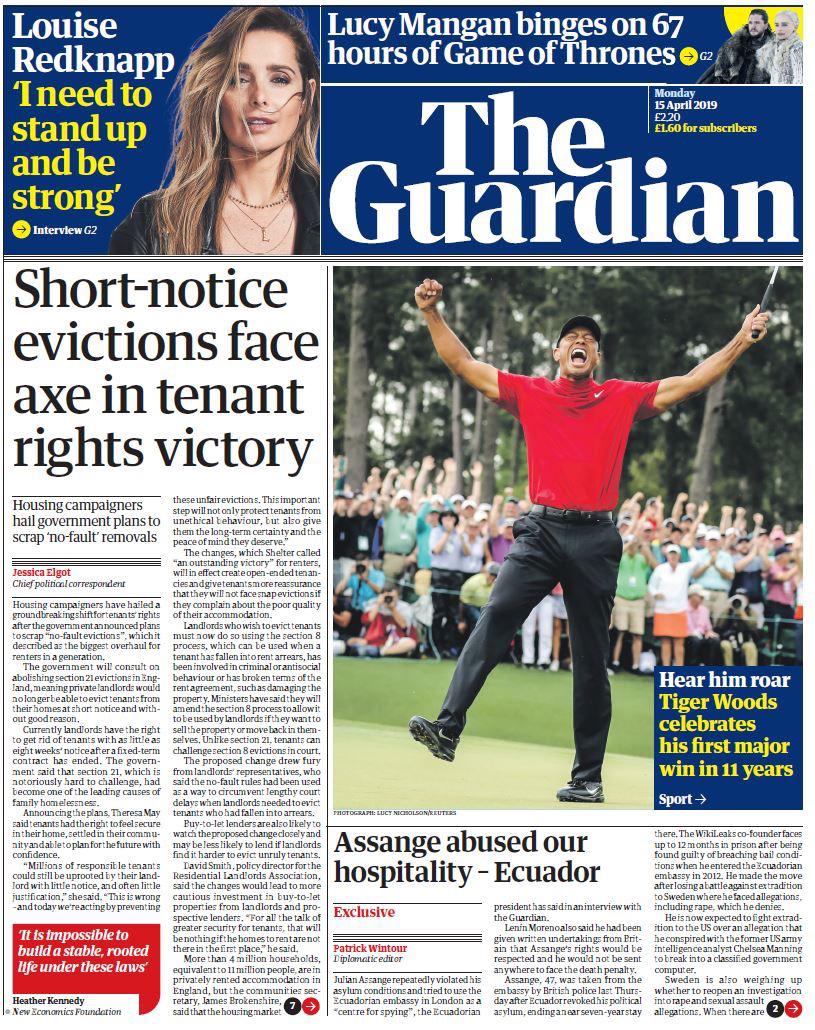 The story made the front page of the national Guardian newspaper who hailed it as a “Tenants Rights Victory”. https://www.theguardian.com/society/2019/apr/15/short-notice-evictions-face-axe-in-tenant-rights-victory
The Financial Times covered the story with the headline that Landlords were facing curbs. https://www.ft.com/content/6d306a50-5d2d-11e9-939a-341f5ada9d40
Meanwhile the independent called it a major reversal of a policy implemented during Margaret Thatcher’s time in Downing Street https://www.independent.co.uk/news/uk/politics/theresa-may-no-fault-eviction-powers-landlords-private-rental-thatcher-policy-a8869676.html